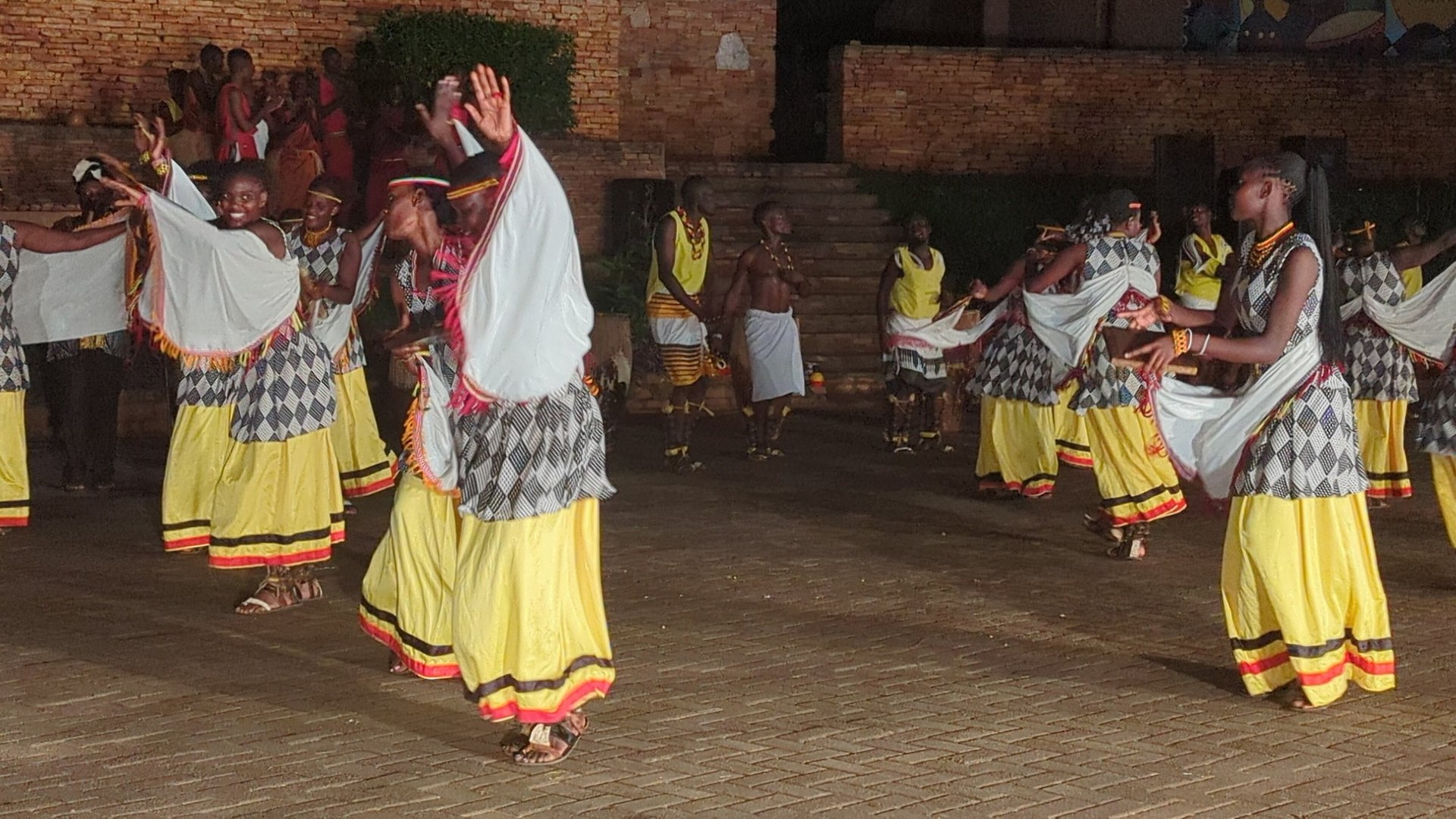
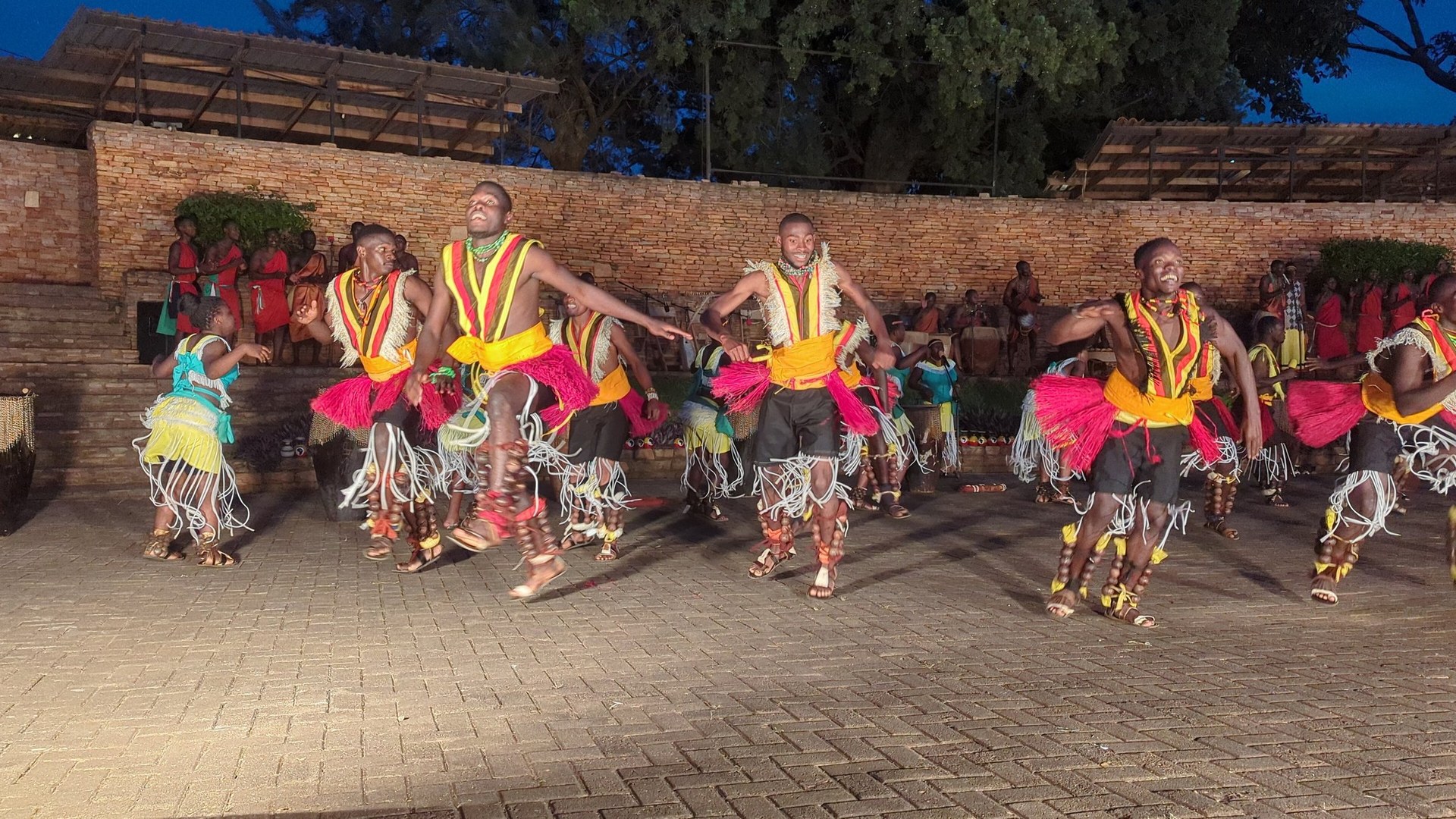
Dancers in red, yellow and white mid step on the open air stage at the Ndere Centre at dusk

Culture

The peoples of Uganda

Uganda is many peoples in one country. The Constitution names sixty five indigenous communities, each with its own language, its own dances, its own food and its own way of marking a life. The largest, the Baganda, are around fifteen in every hundred Ugandans; no one people is a majority. Here are some of them, from the shores of Lake Victoria to the plains of Karamoja.

List of tribes in UgandaUganda

Who lives where

Ma'diMa'di, around Moyo and AdjumaniAcholiAcholi, around GuluKaramojongKaramojong, around MorotoLangiLangi, around LiraItesoIteso, around SorotiBatooro, BanyoroBatooro and Banyoro, around Fort Portal and HoimaBagisuBagisu, around MbaleBasogaBasoga, around JinjaBagandaBaganda, around KampalaBanyankoleBanyankole, around MbararaBakigaBakiga, around Kabale
Each name is placed near a home town of that people, and many live all over the country. Map data: Natural Earth.
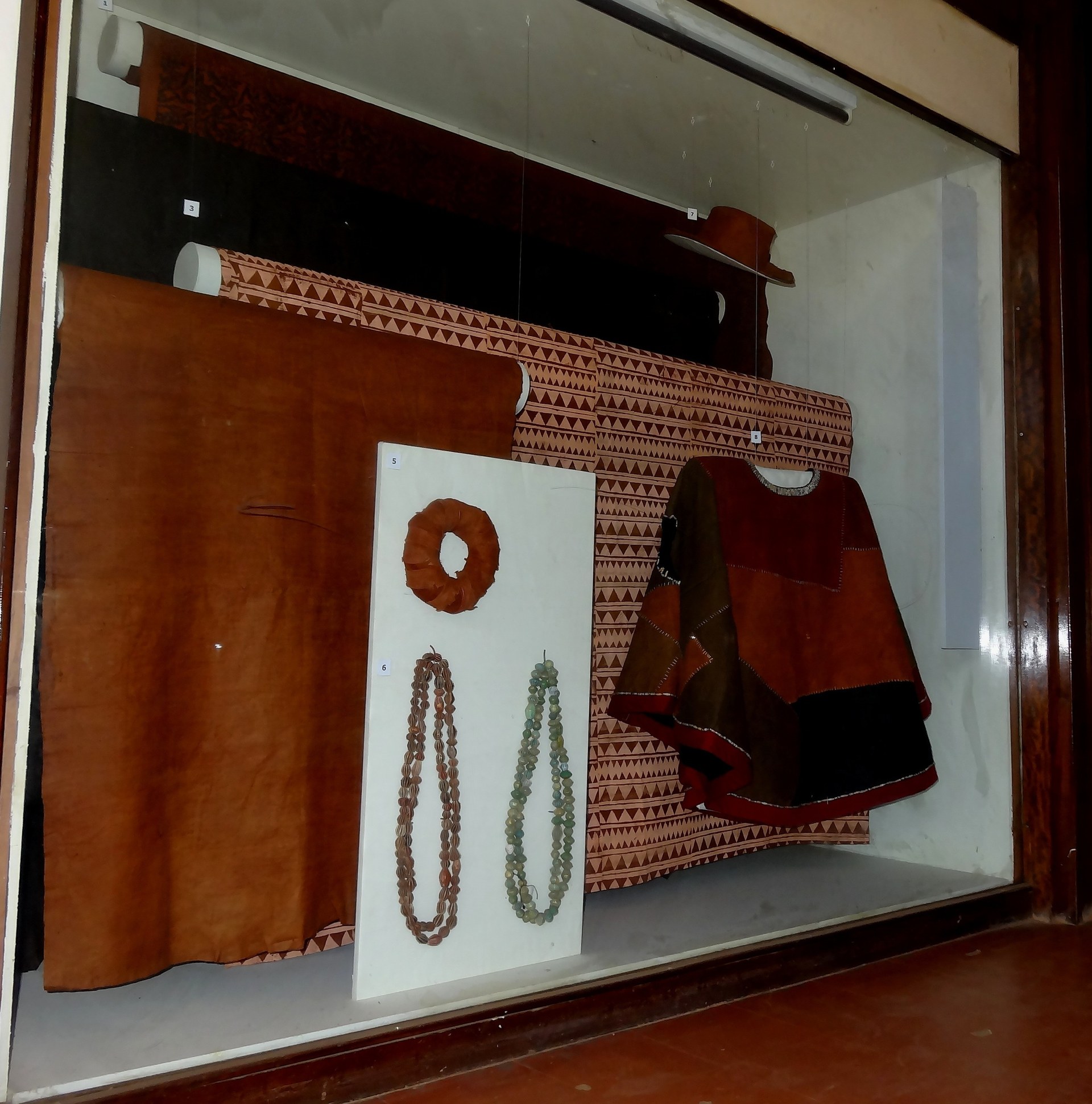
Barkcloth garments and beads in a museum case
Barkcloth. Photo: Lneruba, CC BY-SA 4.0.

Baganda

Where
Centre, around Kampala and the shore of Lake Victoria
Language
Luganda
Led by
The Kabaka, king of Buganda
Dance
Bakisimba, born at the king's palace
Food
Matooke, and luwombo steamed in banana leaves
Heritage
Barkcloth making, UNESCO 2008

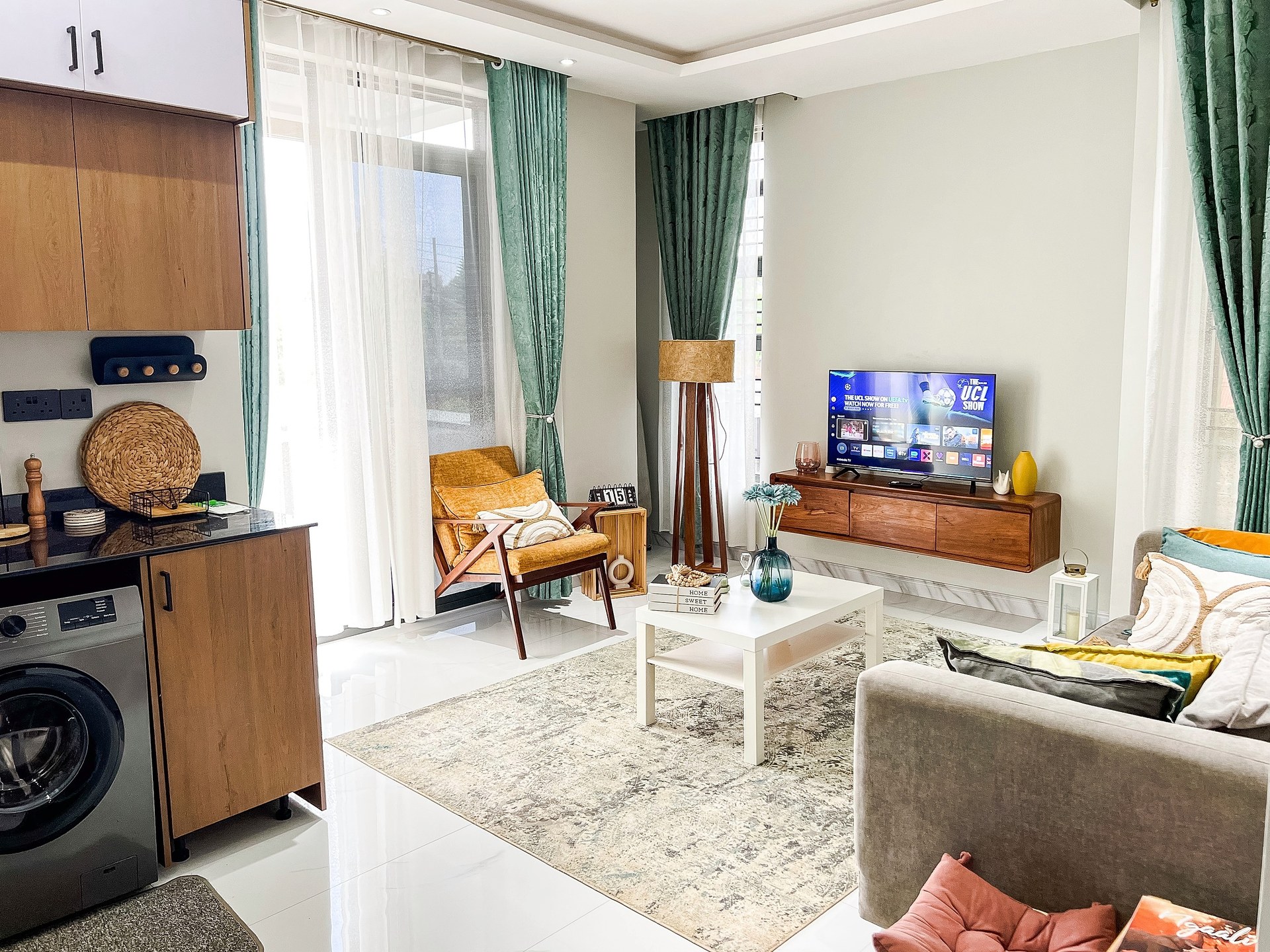
The people of Buganda, and of the land the apartment stands on. Every Muganda belongs to a clan, traditionally fifty two, each with its own animal or plant totem that its members will not eat or harm.

Women dress in the gomesi, men in the long white kanzu, and the old cloth of the kingdom is barkcloth, beaten from the inner bark of the mutuba tree.

BagandaGomesiBarkcloth making in UgandaWhy we dance the way we doUgandan cuisine

Ndere Troupe dancers in yellow skirts and patterned shawls performing the Ekitaguriro at night
Ndere Troupe, Ekitaguriro dance. Photo: Kateregga1, CC BY-SA 4.0.

Banyankole

Where
South west, the old kingdom of Ankole
Language
Runyankore
Led by
Their kingdom has not been restored
Dance
Ekitaguriro, a dance of love for the herd
Food
Eshabwe, the white ghee sauce

The people of Ankole are known for keeping cattle, above all the Ankole cattle with their great, curving horns.

Their love of cattle is in their dance and on their table: the Ekitaguriro, arms raised like horns, and eshabwe, ghee beaten with rock salt until it turns from yellow to white, once kept for honoured guests.

BanyankoleAnkole Watusi cattleWhy we dance the way we doFood that has typified Uganda since independence

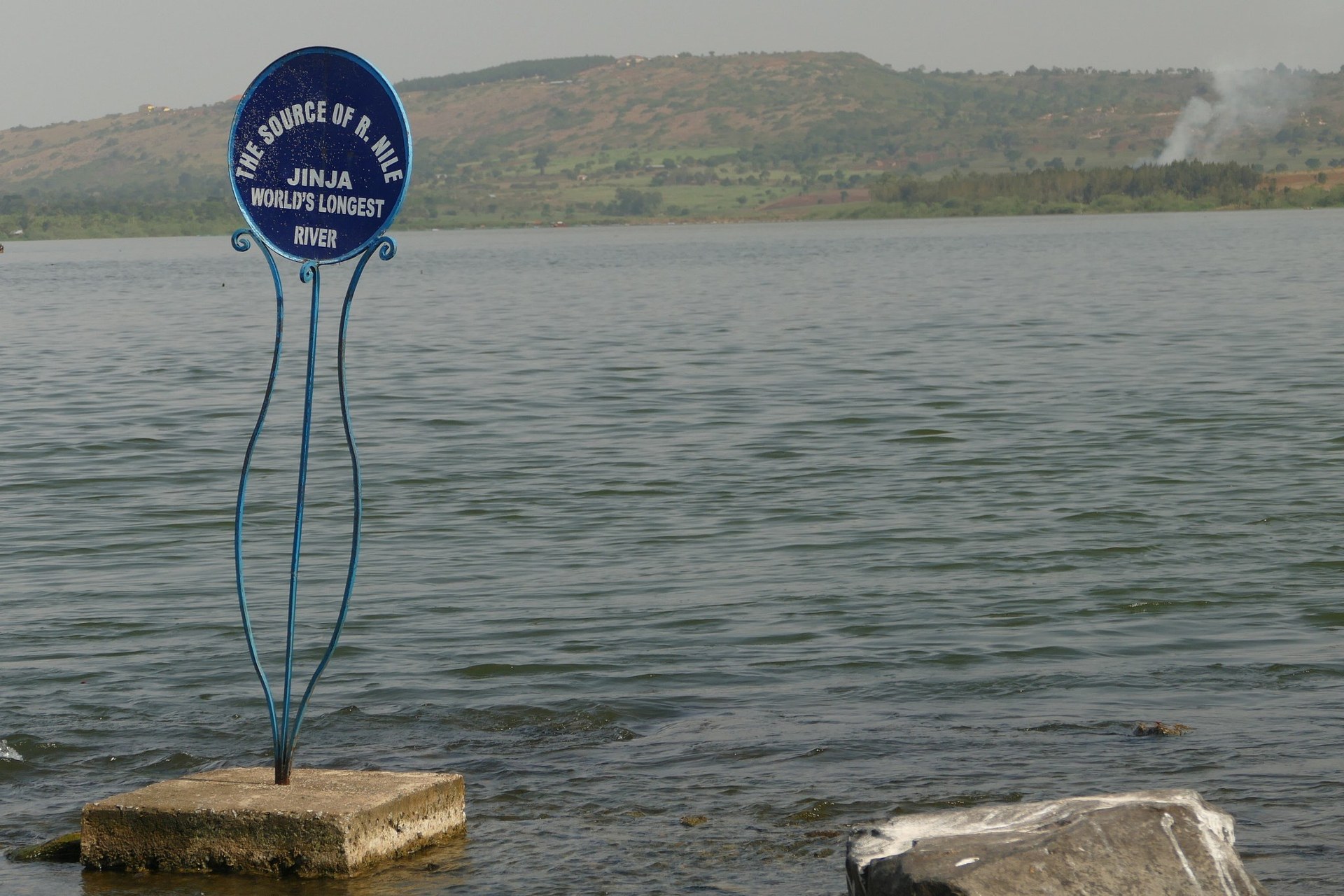
The marker for the source of the Nile at Jinja, in the water
Source of the Nile, Jinja. Photo: Daniel Aufgang, CC BY 3.0.

Basoga

Where
East, between Lake Kyoga, the Nile and Lake Victoria
Language
Lusoga (Olusoga)
Led by
The Kyabazinga of Busoga
Music
Bigwala gourd trumpets
Heritage
Bigwala, UNESCO 2012

Busoga is bounded by water on three sides: Lake Kyoga to the north, Lake Victoria to the south, and to the west the Nile, which leaves the lake at Jinja.

Its royal music is Bigwala: five or more gourd trumpets, each sounding a single note, so the tune lives only when they play together. Its songs tell the history of the Basoga and their king.

BasogaBigwala

And across the country

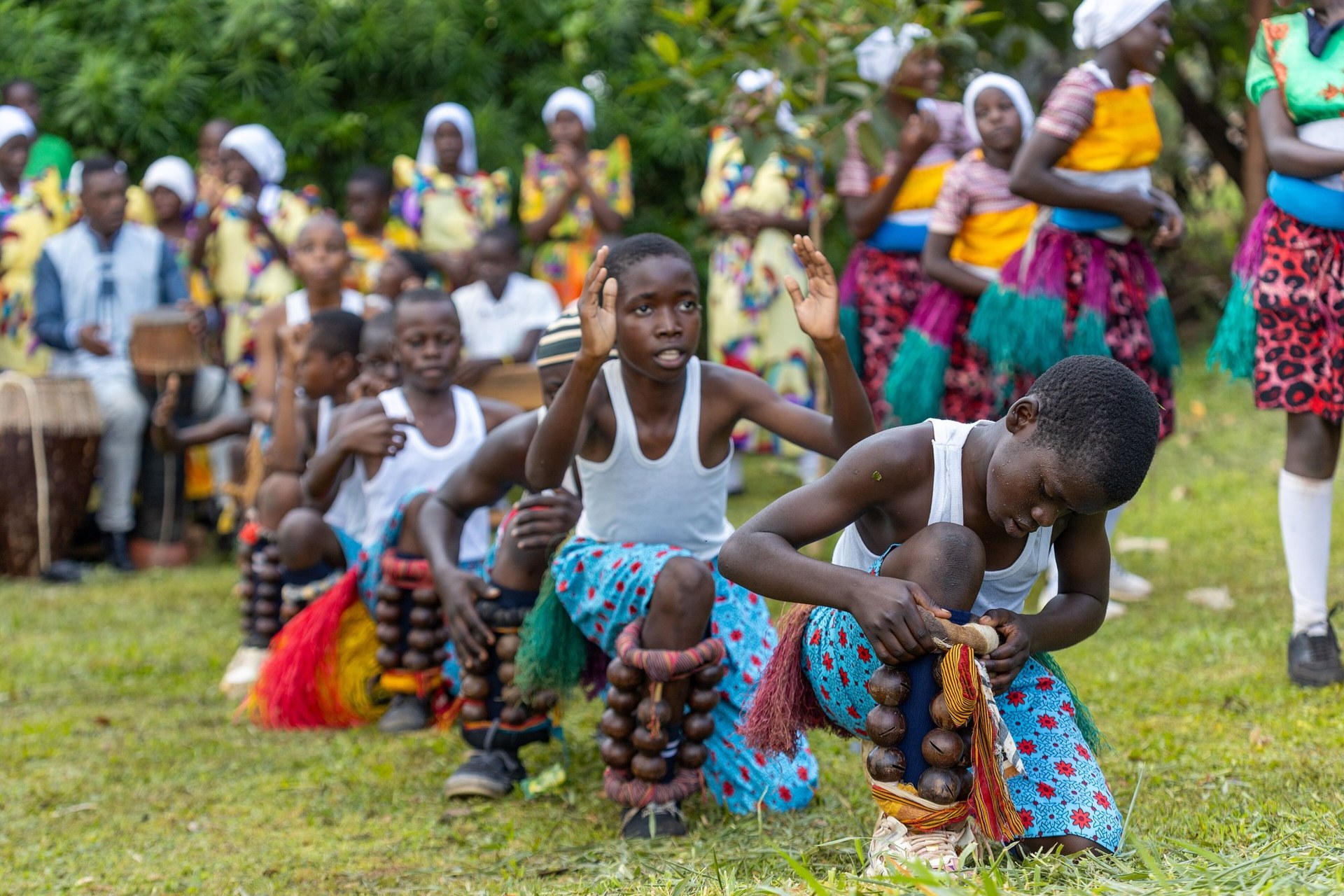
Young dancers with rattles tied to their legs, dancing before a crowd at an outdoor celebration
Rhythms of the Ebinyege, the leg rattles. Photo: Jameswasswa, CC BY-SA 4.0.

Batooro and Banyoro

Where
West, from the Rwenzori mountains to Lake Albert
Language
Rutooro and Runyoro
Led by
An Omukama in Tooro, and in Bunyoro Kitara
Names
Empaako, twelve names of affection
Dance
Runyege
Heritage
Empaako, UNESCO 2013

Two neighbouring peoples with kingdoms of their own and much in common. Every child is given an Empaako, one of twelve names of affection, besides their own; calling someone by it is a greeting in itself, a sign of warmth and respect that can soften anger.

Their courtship dance is the Runyege, danced by the young.

Empaako tradition of western UgandaBunyoroWhy we dance the way we do
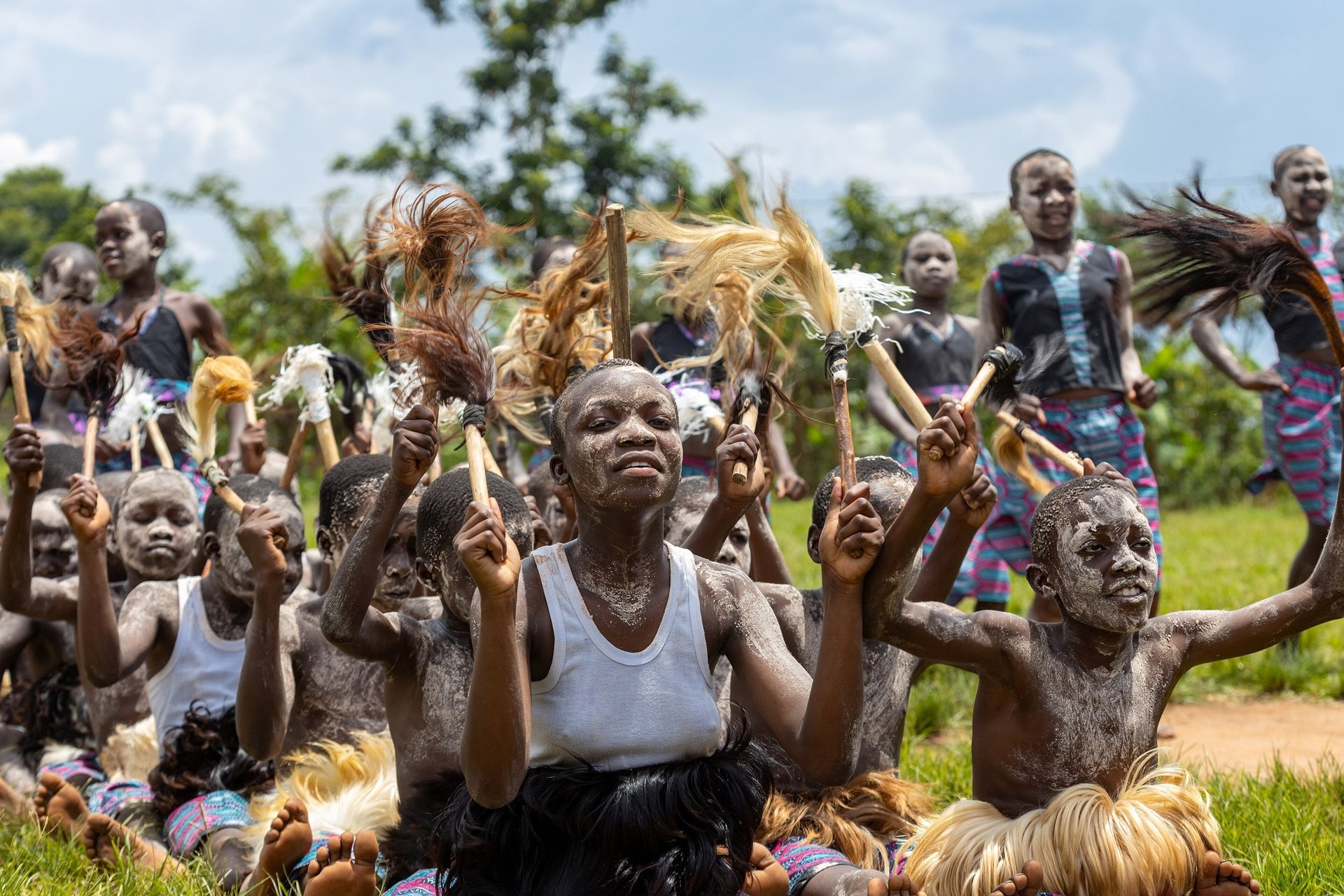
Bagisu dancers painted with white clay, raising feathered sticks at an Imbalu celebration
Bagisu dancers. Photo: Jameswasswa, CC BY-SA 4.0.

Bagisu

Where
East, on the slopes of Mount Elgon around Mbale
Language
Lumasaba
Led by
Clans
Ceremony
Imbalu, every two years
Food
Malewa, bamboo shoots
Crop
Bugisu Arabica coffee

Every two years, in August, the young men of the Bagisu go through Imbalu, the initiation that marks them as men.

On the mountain's slopes they grow Arabica coffee, and their ancestors' food, malewa, is bamboo shoots from the Elgon forests, dried, smoked and cooked in groundnut sauce.

BagisuUgandan cuisine

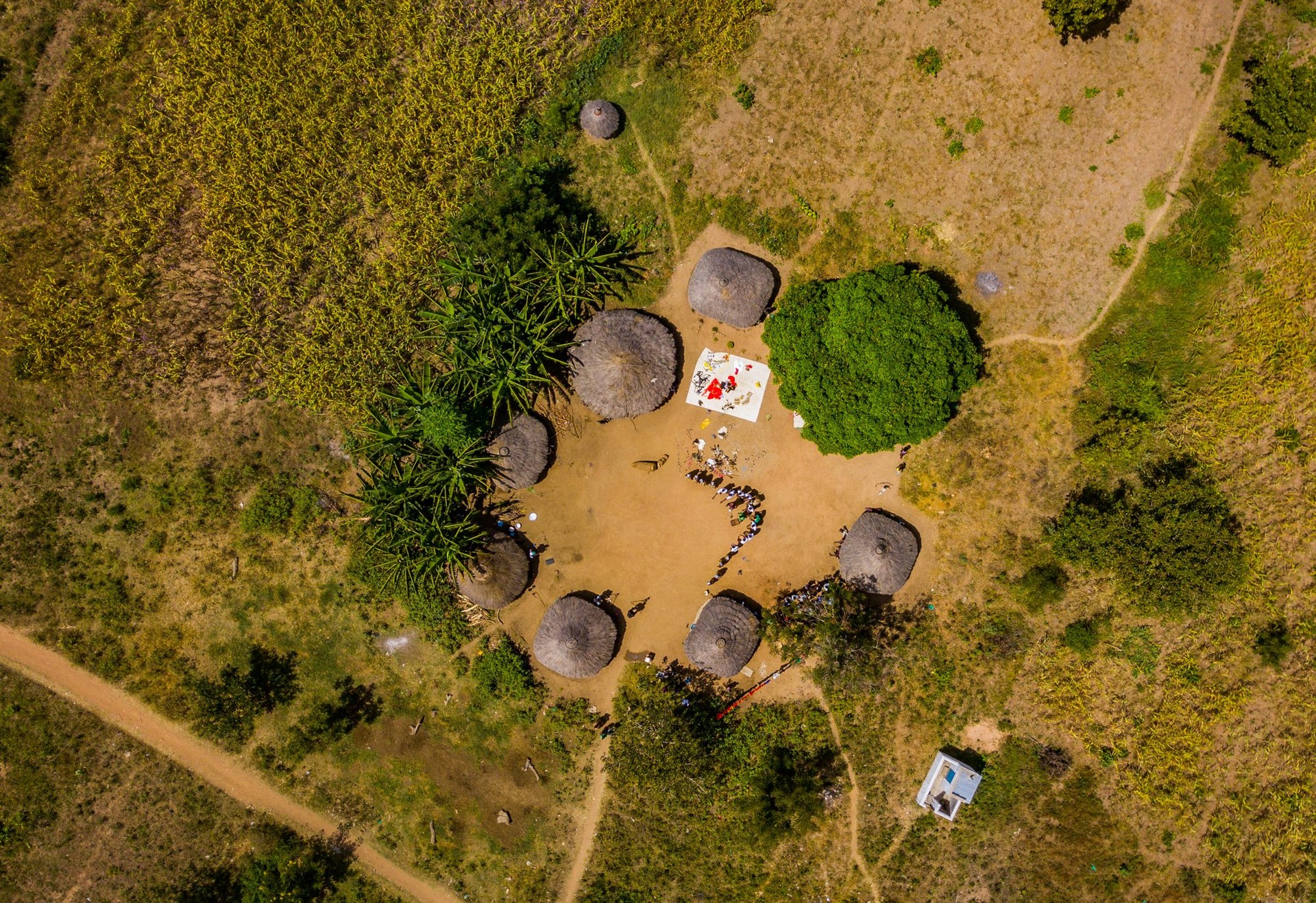
A Teso homestead seen from above: round thatched houses around a swept yard among green fields
Iteso homestead. Photo: Dixon099, CC BY-SA 4.0.

Iteso

Where
East, the Teso plains
Language
Ateso
Led by
Clans
Drink
Ajon, shared from one pot
Food
Millet and sorghum

One of the country's largest peoples, around seven in every hundred Ugandans. Finger millet and sorghum are their staples.

At ceremonies and gatherings they share ajon, a brew of fermented millet, sipped through long tubes from one pot set in the middle.

Iteso people

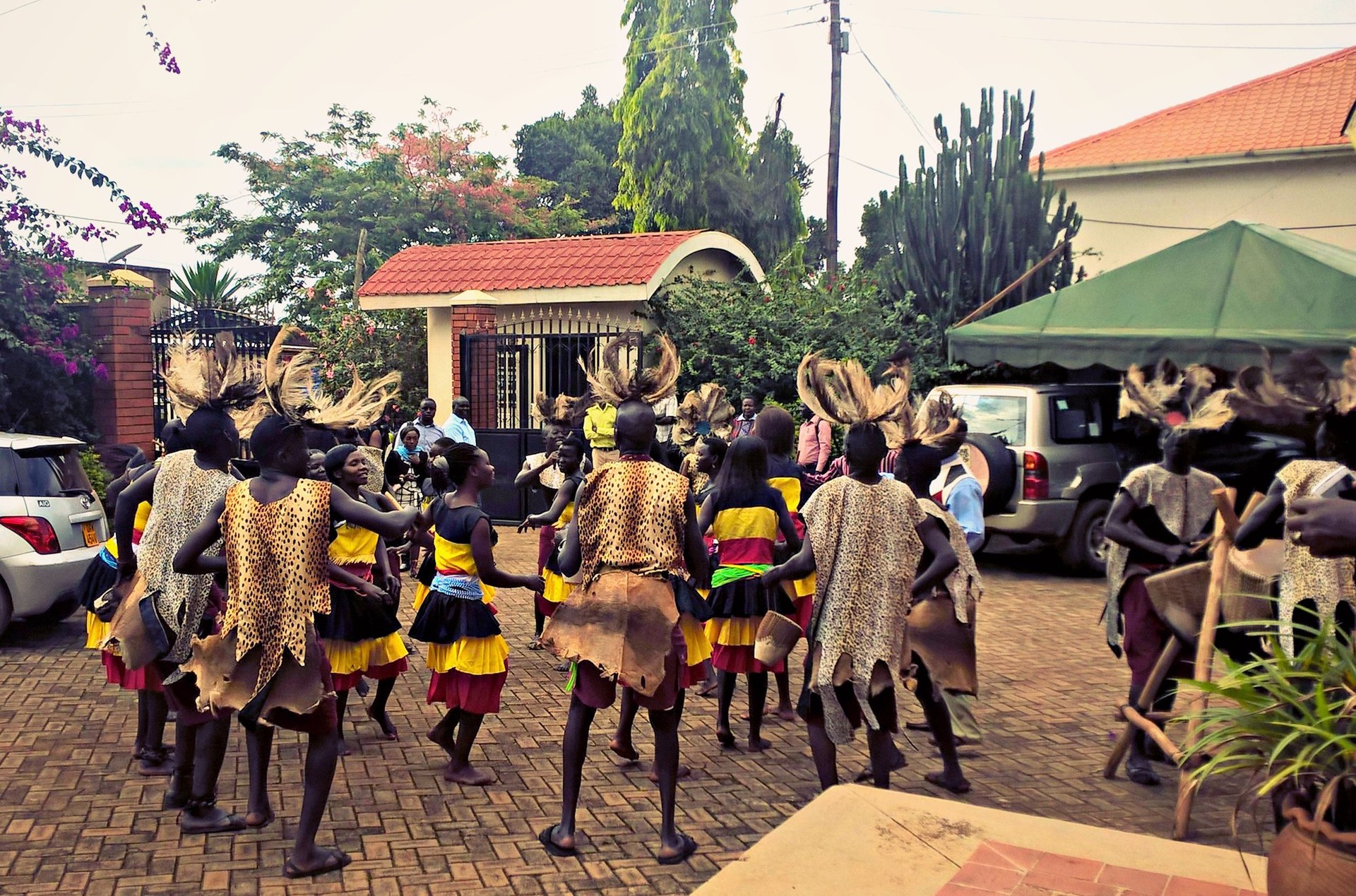
Acholi dancers in feathered headdresses and animal skins performing the Bwola dance
Acholi Bwola dance. Photo: PaolaPileri, CC BY-SA 4.0.

Acholi

Where
North, Acholiland
Language
Acholi, a Luo language
Led by
Chiefs, the rwodi
Dance
Larakaraka
Food
Millet and sim sim paste

In Acholiland, chiefdoms were led by a rwot, a ruler, usually from one clan. Women farmed millet, sim sim (sesame), groundnuts and sorghum; men kept goats, sheep and cattle.

Their best known dance is the Larakaraka, a courtship dance of strength and stamina.

Acholi peopleWhy we dance the way we doUgandan cuisine

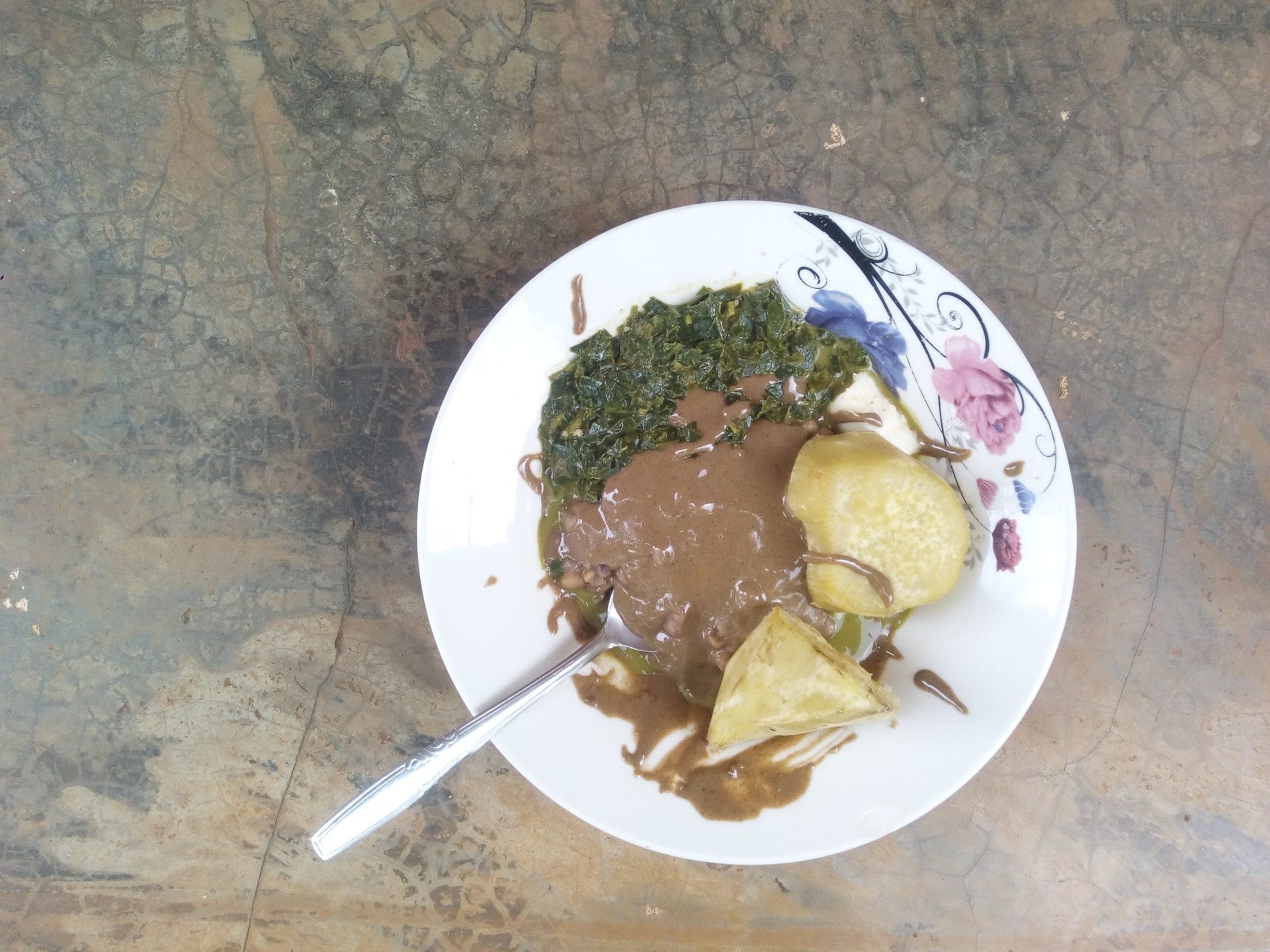
A traditional Lango meal on a plate: pasted boyo greens with a sauce and a starch
Lango traditional meal. Photo: Emma Oruk, CC BY-SA 4.0.

Langi

Where
Central north, Lango
Language
Lango
Led by
Clans
Heritage
The male child cleansing ceremony, UNESCO 2014

The Langi keep a healing ceremony for a boy believed to have lost his standing: over three days he is cared for like a newborn, then welcomed back, his place in the community restored. UNESCO lists it among the traditions that need urgent care.

Male child cleansing ceremony of the Lango

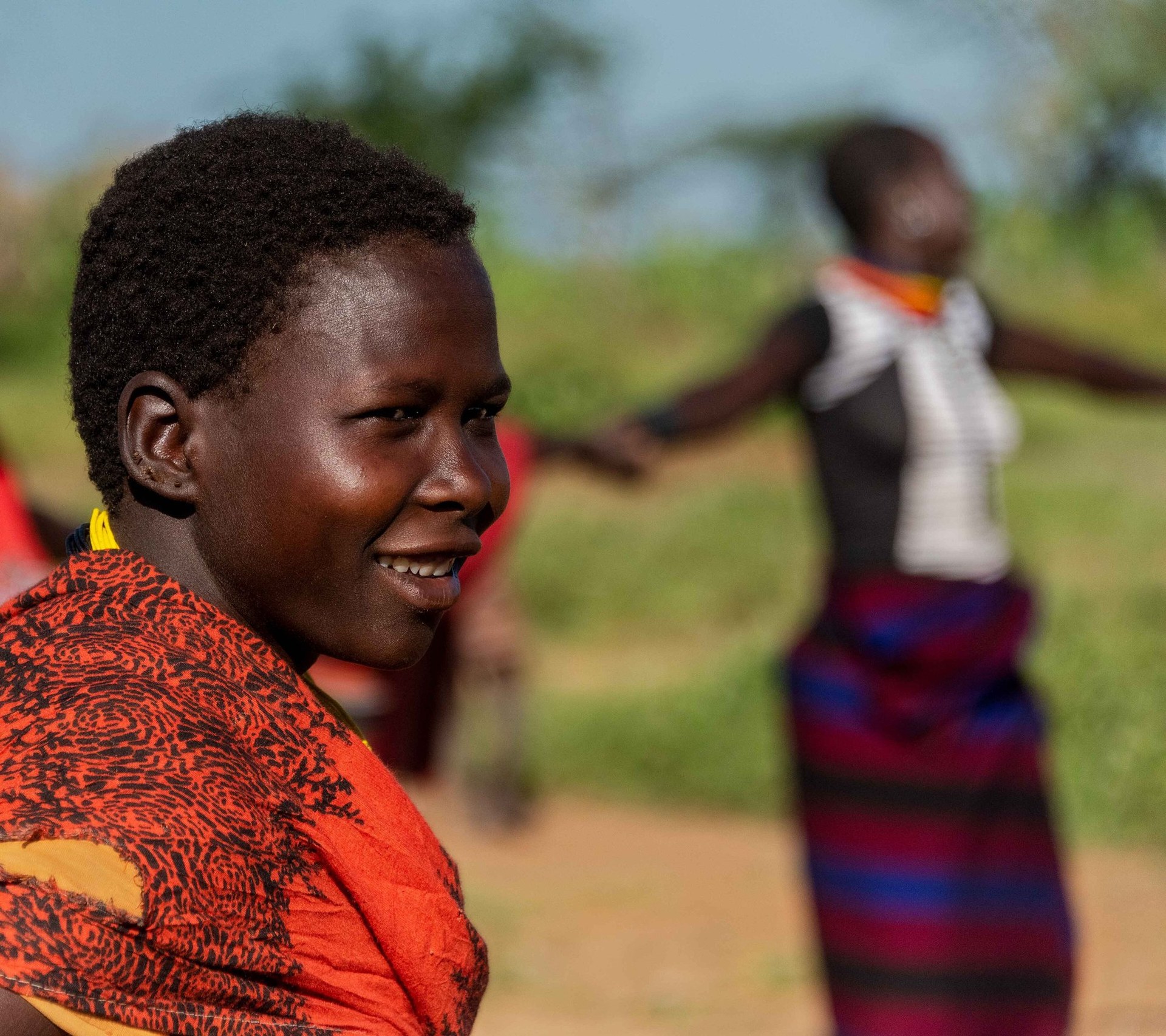
A smiling Karamojong woman in a red wrap, with a dancer behind her
Karamojong dancers. Photo: Rod Waddington, CC BY-SA 2.0.

Karamojong

Where
North east, the plains of Karamoja
Language
Ngakarimojong
Led by
Elders, by generations
Life
Cattle, and the long walk to pasture
Dance
Leaping dances at weddings

Herders of the dry north east, where cattle are wealth, a bride's price and a young man's standing. In the dry months they walk their herds to far pastures for three or four months at a time.

Their society is ordered by generations: leadership passes from one generation to the next about every fifty years. At weddings they dance with high leaps.

Karamojong people

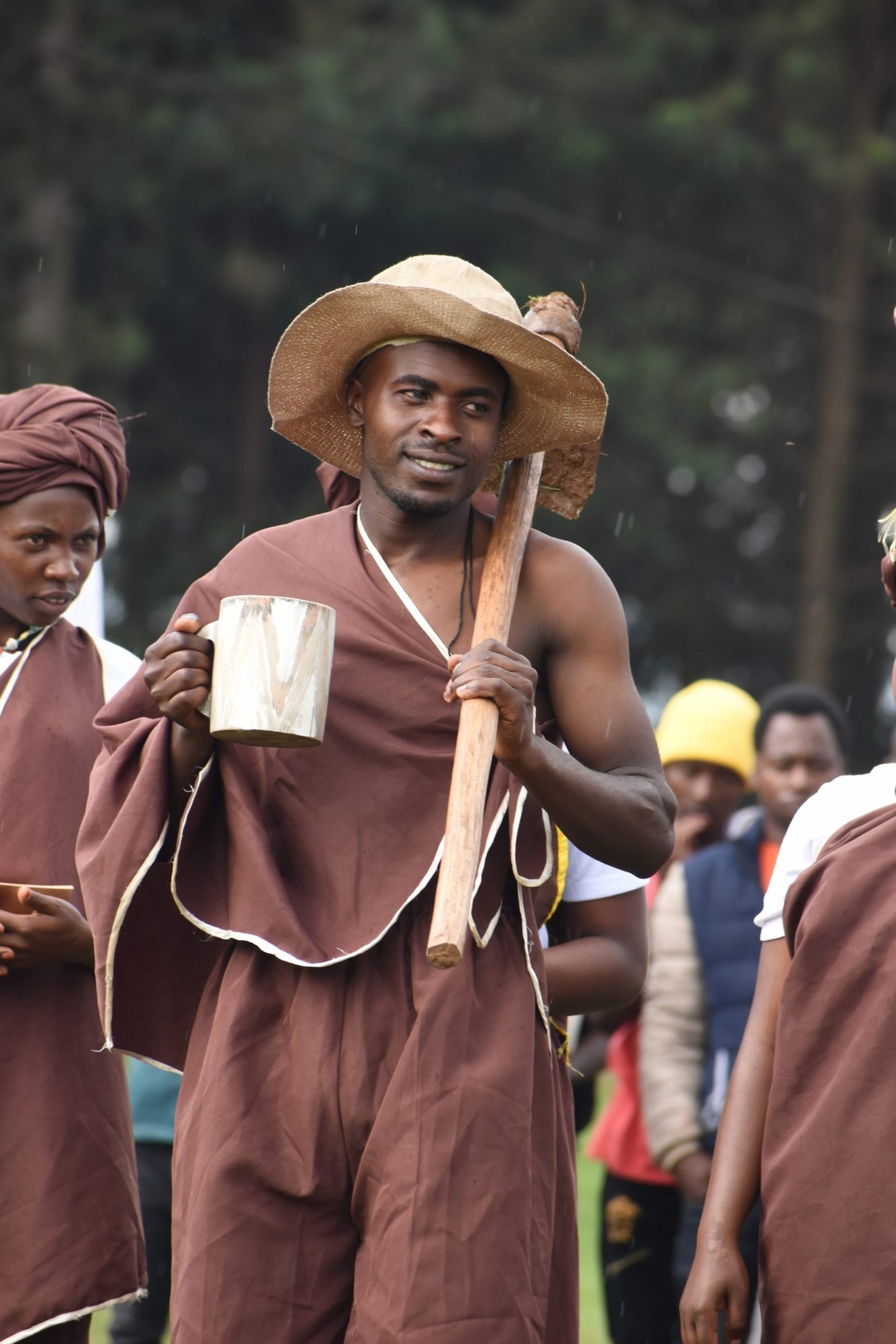
A Mukiga man in traditional brown dress holding a hoe and a wooden cup of bushera
A Mukiga man. Photo: Rtr PK, CC BY-SA 4.0.

Bakiga

Where
South west, the hills of Kigezi
Language
Rukiga
Led by
Councils of clan elders
Way of life
Elders' councils, no king

The Bakiga never had a king: their clans were led by councils of elders, and disputes were settled in open assembly. Each clan has a totem animal its members will not hunt or eat.

They are known for their hospitality and their hard work on the steep hills of Kigezi.

Bakiga

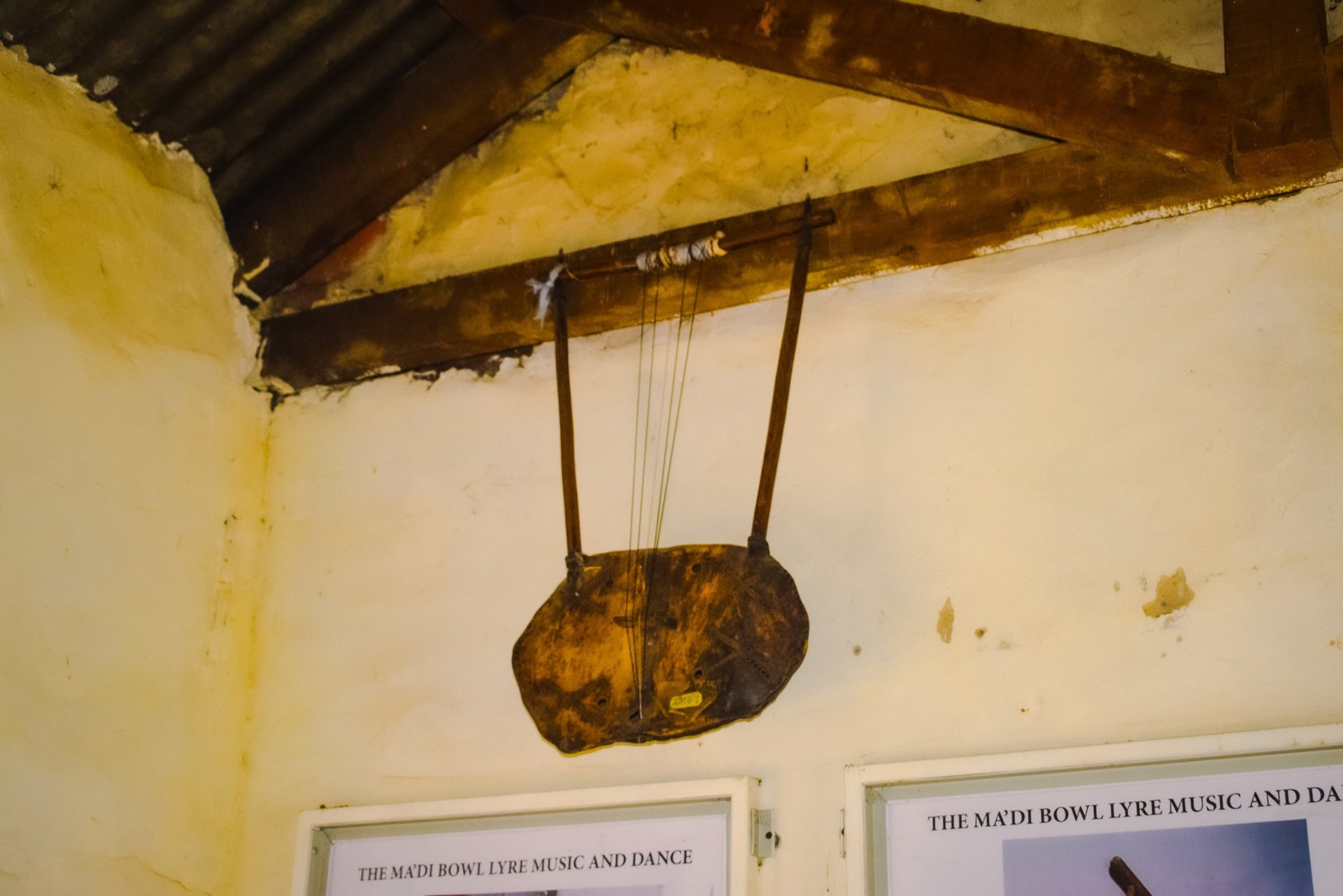
A Ma'di bowl lyre hanging on the wall of the Madi Community Museum in Moyo
Madi bowl lyre, Madi Community Museum. Photo: AKibombo, CC BY-SA 4.0.

Ma'di

Where
North west, by the Nile
Language
Ma'di
Led by
Clans
Music
The bowl lyre
Heritage
Ma'di bowl lyre music and dance, UNESCO 2016

The Ma'di play the bowl lyre, made from plant and animal materials, at weddings, harvests, mournings and to settle disputes. Senior players teach the songs and dances to the young, and UNESCO lists it among the traditions that need urgent care.

Ma'di bowl lyre music and dance

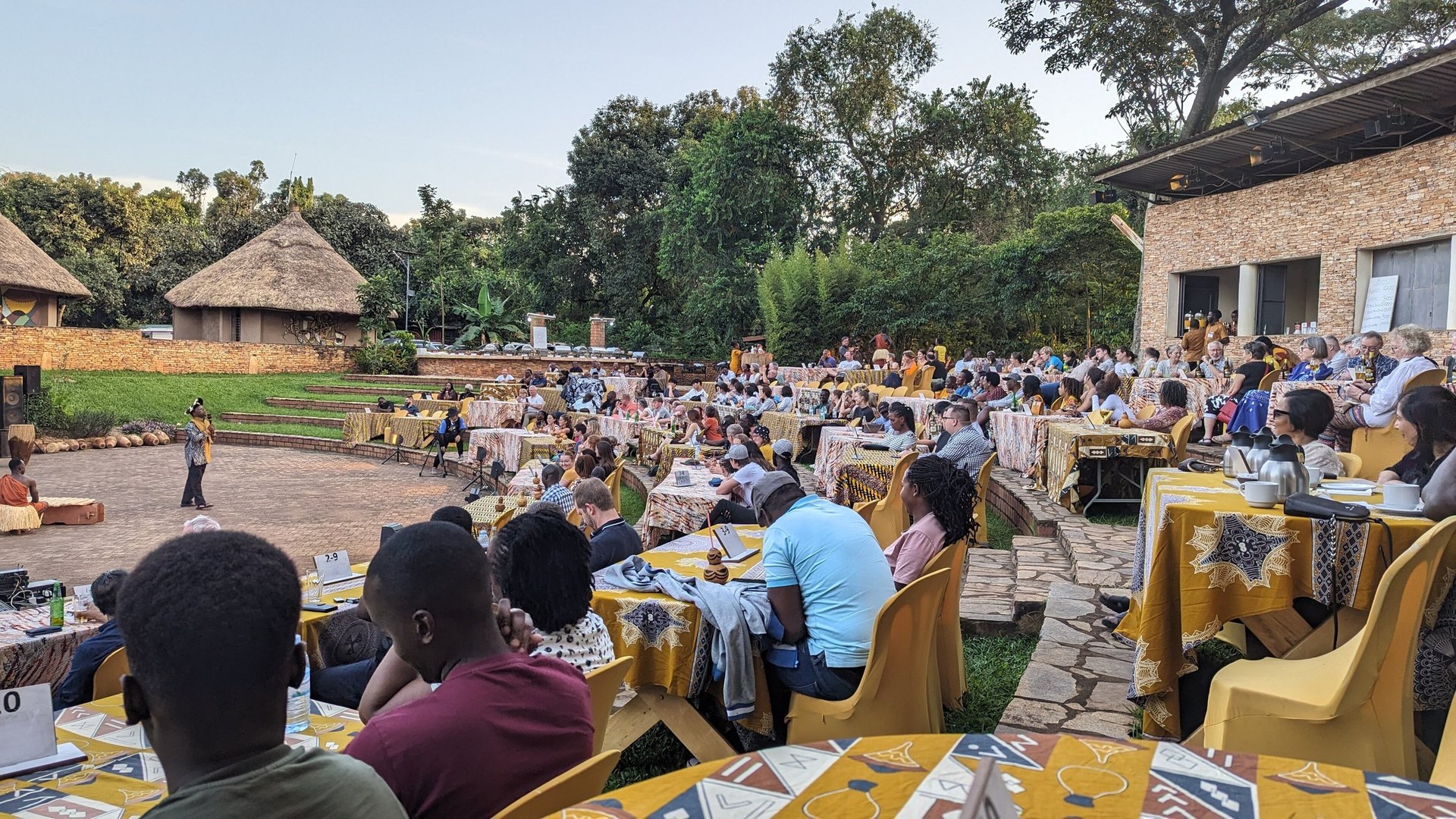
Diners at tables around the open air amphitheatre of the Ndere Centre, watching a performance
Sherehe Show, Ndere Centre. Photo: Kateregga1, CC BY-SA 4.0.

Watch these dances live, a short ride away

The Ndere Troupe performs the dances and music of Uganda's peoples at the Ndere Centre on Kira Road, in Ntinda, close to the apartment.

Evenings at Ndere

Ndere's nights of live Ugandan culture

Wherever you go

A few things every people appreciates

  1. Greet before you ask. A Ugandan greeting takes its time: how are you, how did you sleep, how is the family.
  2. Dress modestly at royal sites, places of worship and in villages: shoulders and knees covered.
  3. Ask before photographing people and ceremonies.
  4. Learn one word in the local language. Webale (thank you) in Luganda is a good start, and always noticed.
  5. Not sure of something? Ask Sandra. She is happy to explain.

Photographs

Photographs from Wikimedia Commons under the licences shown; crops and resizing are ours. An editorial page by BluBlush Fine Living, written from the sources linked under each people. Uganda has many more peoples than these; this is a first introduction.